FEMA Denies Individual Disaster Aid to Texas Flood Survivors: Facts, History, and What Happens Next

The Federal Emergency Management Agency (FEMA) has decided not to provide individual disaster assistance to Texans affected by the July 2026 floods, leaving families in communities such as Uvalde and Kerr County facing difficult questions about how they will repair their homes, replace belongings, and pay for temporary housing. Texas Gov. Greg Abbott and the Texas Division of Emergency Management are reviewing the decision and considering an appeal, according to reporting by The Texas Tribune.
The decision is significant because some affected residents in Kerr County were already recovering from the devastating July 2025 floods when another round of flooding struck in 2026. The latest development also raises broader questions about the division of responsibility between the federal government and states when disasters overwhelm local resources.
The central issue is not simply whether federal money will be available. It is whether Texas can provide adequate financial support to disaster survivors if federal assistance is denied, delayed, or reduced.
What Happened? Key Facts About the FEMA Decision
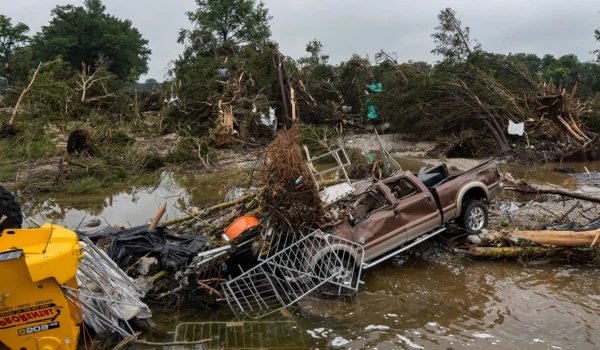
According to The Texas Tribune report published October 21, 2026, FEMA declined to open its individual assistance program for people affected by the July 2026 Texas floods. The state is reviewing its options, including whether to appeal.
Here are the main facts behind the story:
- Federal individual assistance denied: FEMA has decided against making individual disaster assistance available for survivors of the July 2026 floods.
- Communities affected: Flooding damaged homes and other property in Uvalde and across Kerr County, among other areas.
- State response: Gov. Greg Abbott and the Texas Division of Emergency Management are reviewing the decision and appeal process.
- Separate public assistance: The federal government had previously agreed to help some local governments recover eligible disaster-related costs. That is different from direct assistance to households.
- Local organizations filling gaps: The Community Foundation of the Texas Hill Country reported providing approximately $1.3 million in emergency financial assistance to 947 households and temporary housing support to 58 households.
- Long-term financial concerns: Texas emergency management officials have warned lawmakers that the state relies heavily on federal funding for disaster response and may need to change how it finances future recovery efforts.
These facts come from the original report and its discussion of the state and local response.
The History Behind the Texas Flooding Crisis
To understand why the latest FEMA decision matters, it is important to examine the two consecutive years of flooding and the changing response to disaster recovery.
- July 2025: The deadly Texas Hill Country floods
On July 4, 2025, torrential rainfall caused the Guadalupe River to rise rapidly, devastating parts of the Texas Hill Country. Kerr County suffered catastrophic losses, including the deaths of 119 people. The victims included children attending Camp Mystic, a summer camp near the river.
The disaster generated a major humanitarian response. Emergency crews conducted rescues, volunteers helped clean damaged properties, and charitable organizations raised money for affected families.
The federal government also approved major disaster assistance. On July 6, 2025, FEMA announced that federal assistance was available for affected individuals in Kerr County, including potential grants for temporary housing and home repairs, alongside other recovery programs.
That earlier response is an important point of comparison. Families affected by the 2026 floods were not necessarily starting from a position of financial stability. Some were still rebuilding from the previous disaster when their properties were damaged again.
- July 2026: Another round of flooding
In July 2026, widespread flooding affected parts of southwest Texas, including Uvalde and Kerr County. The damage included flooded homes, damaged roads and bridges, and disruptions to local businesses.
The impact was especially severe for communities already struggling with the cost of the previous year’s disaster. According to The Texas Tribune, Kerr County officials reported that hundreds of homes had been destroyed or seriously damaged and that infrastructure repairs remained a major concern.
The second disaster also exposed a problem with relying on private donations and volunteers as the primary backup for federal support. Public attention and charitable contributions were less extensive than they had been in 2025, leaving some residents with fewer resources for rebuilding.
- August–October 2026: Delayed assistance followed by denial
The timeline of the federal response helps explain the significance of the latest announcement.
July 2026
Flooding and initial requests
Texas sought federal assistance after extensive damage across affected counties.
Aug. 28
Major aid still unresolved
Reporting documented weeks of waiting for broader assistance for individuals and local governments.
September
Some local-government costs covered
Abbott announced federal assistance for some eligible local-government recovery costs, while the decision on individual assistance remained pending.
Oct. 21
Individual assistance denied
FEMA declined to open individual assistance for the July 2026 flood survivors. Texas officials began reviewing the possibility of an appeal.
This timeline shows that the October announcement was not the beginning of the problem. The uncertainty had already affected residents’ ability to plan repairs, secure housing, and determine how much of the recovery cost they would have to cover themselves.
What Is FEMA Individual Assistance, and Why Does It Matter?
FEMA individual assistance is federal disaster aid intended to help eligible individuals and households address certain essential needs after a qualifying disaster. Depending on the declaration and applicable rules, assistance may include support for temporary housing, essential home repairs, and other eligible disaster-related expenses.
It is important to distinguish this program from Public Assistance, which can help eligible state and local governments and certain nonprofit organizations pay for approved emergency work and repair or replacement of damaged public infrastructure.
That distinction explains why federal help for some local governments does not mean that individual homeowners will receive FEMA grants.
For flood survivors, individual assistance can help cover costs such as:
- Making a home safe and habitable again.
- Paying for temporary accommodation when a property cannot be occupied.
- Replacing certain essential personal property or addressing other eligible disaster-related needs.
- Meeting urgent expenses while pursuing insurance claims and longer-term recovery options.
FEMA assistance is not a guarantee of full compensation for all flood damage. Eligibility depends on the applicable program requirements, the disaster declaration, the nature of the losses, and other factors.
For residents whose homes were damaged twice in two years, the denial creates an additional challenge: they may have already used savings, borrowed money, or exhausted previous sources of assistance during the 2025 recovery.
Why Did FEMA Deny Assistance to Texas Flood Survivors?
FEMA said it reviews disaster-assistance requests individually and considers several factors when determining whether federal support is warranted. According to the October 21 report, those factors include:
- The extent of available insurance coverage.
- Other recent disasters affecting the state or community.
- The characteristics of the population affected.
- Disaster-related unemployment.
- The state’s financial capacity to respond and recover.
FEMA’s stated position is that states should take a leading role in community response and recovery, with federal assistance provided when warranted. The agency has not, in the reporting cited here, provided a detailed public explanation identifying which specific factor determined the outcome of Texas’s request. It would therefore be inaccurate to claim that a single factor, such as Texas’s finances or flood insurance coverage, caused the denial.
The Trump administration has also been pursuing changes to FEMA’s role. A federal review council recommended greater responsibility for state and local governments in disaster response and recovery.
Supporters of this approach may argue that states should prepare financially for disasters rather than rely heavily on federal reimbursement. Critics, however, warn that states with large rural areas, repeated disasters, and limited local tax bases may struggle to cover the costs without federal support.
Texas illustrates the tension between these two positions.
Texas’s Disaster Budget Raises Serious Questions
One of the most significant details in the report concerns Texas’s reliance on federal funding.
Texas Division of Emergency Management Chief Nim Kidd told state lawmakers that the state had budgeted approximately $1.9 billion for emergency response in 2027 but was contributing only $37 million from state funds, according to the report.
Reported 2027 emergency-response funding
$1.9 billion
Total budgeted amount cited in the report
State contribution
$37 million
Approximately 1.95% of the reported total, rounded to 2%.
Source: The Texas Tribune, October 21, 2026. These figures describe the reported emergency-response budget, not a dedicated fund exclusively for individual flood survivors.
The figures suggest a significant structural challenge. If federal reimbursements slow down or federal assistance becomes less available, Texas could face pressure to increase state spending, reduce other expenditures, or leave local governments and households to cover a larger share of disaster recovery costs.
However, the $1.9 billion figure should not be interpreted as money that is automatically available to every household affected by a flood. Emergency-response budgets and direct grants to individuals serve different purposes and operate under different rules.
The broader policy question is whether Texas has sufficient financial reserves and a suitable funding system to support residents when a major disaster occurs.
Who Is Most Likely to Suffer From the Decision?
The denial could have particularly serious consequences for residents who have limited savings, inadequate insurance, or few alternative housing options.
- Homeowners without sufficient flood insurance
Some homeowners may discover that their insurance does not cover all their losses or that they lack a policy covering flood damage. Without FEMA individual assistance, eligible repair costs and temporary housing expenses may become harder to manage.
Homeowners should check their actual policy language rather than assume that standard homeowners insurance covers flooding.
- Renters and displaced families
Families whose homes are unsafe may need to stay in hotels, rent temporary accommodation, or live with relatives. Those expenses can accumulate quickly, especially when recovery takes months rather than weeks.
- Small businesses and local workers
Flood-damaged businesses may have to repair buildings, replace equipment, and cope with interruptions to operations. Even when a business does not qualify for a particular federal program, damage can affect employees, suppliers, and other businesses in the surrounding community.
- Rural communities with limited resources
Smaller communities may lack the financial reserves, administrative staff, and fundraising networks available to larger metropolitan areas. Repeated flooding can further weaken their ability to recover.
These effects explain why disaster-recovery experts are concerned about the absence of individual assistance. A delay or denial can affect not only the speed of rebuilding but also whether families can remain in their communities.
Can Texas Appeal FEMA’s Decision?
Yes, the state is reviewing the decision and the process for appealing it, according to the governor’s office as reported by The Texas Tribune. However, the October 21 report does not establish that an appeal has been formally filed or that FEMA will reverse its decision.
A potential appeal would likely need to address the basis for the denial and provide relevant supporting information about the disaster’s effects and the state’s ability to respond. The exact requirements and outcome depend on the applicable federal process.
Meanwhile, Gov. Abbott’s spokesperson pointed to other measures the state had pursued, including a request to suspend federal tax deadlines and waive late fees for affected people and businesses, as well as an extension of the period for certain SNAP recipients in affected counties to seek replacement benefits for food lost in the floods.
These measures may provide limited relief, but they are not equivalent to FEMA individual assistance for housing and home repairs. Tax relief, food-replacement benefits, local-government funding, and direct disaster grants address different needs.
What Can Flood Survivors Do Now?
Although FEMA individual assistance has been denied for this disaster as reported on October 21, affected residents should not assume that every other form of support is unavailable.
Practical steps include:
- Document the damage. Take photographs and videos, prepare an inventory of damaged property, and retain repair estimates and receipts.
- Contact your insurer. File any applicable claim promptly and keep written records of communications and claim decisions.
- Ask local authorities about recovery programs. County emergency-management offices and state agencies may have information about available assistance and community resources.
- Contact nonprofit organizations. Local charities, community foundations, and disaster-relief organizations may offer emergency grants, temporary housing, supplies, or repair assistance, subject to eligibility and available funding.
- Keep records of expenses. Document temporary accommodation, cleanup, essential purchases, and repairs. Records may be useful for insurance claims or any later assistance program for which you qualify.
- Monitor official announcements. If Texas appeals the decision or a different program becomes available, official state and federal updates will be important.
Residents can check FEMA’s official website at DisasterAssistance.gov for program information, but they should verify which programs are currently available for their specific disaster.
What Happens Next? Three Possible Outcomes
The next phase will depend on decisions by state officials and FEMA.
Scenario 1: Texas appeals and FEMA reconsiders
If the state challenges the decision and FEMA changes its position, eligible residents could gain access to individual assistance. This remains a possibility, not a confirmed outcome.
Scenario 2: Texas expands state-funded assistance
State lawmakers could consider establishing or expanding a dedicated disaster-relief fund for households. Such a program would require decisions about funding, eligibility, and administration.
Scenario 3: Local organizations shoulder more of the burden
If federal individual assistance remains unavailable and the state does not create a sufficiently funded alternative, affected families may have to rely more heavily on insurance, personal savings, charitable donations, and community support.
The third scenario presents the greatest concern for households that cannot afford repairs or temporary accommodation on their own.
Analysis: Why This News Matters Beyond Texas
The FEMA decision is part of a larger debate about how the United States should finance disaster recovery.
The traditional federal-state model distributes responsibilities across different levels of government. Local authorities handle immediate needs and coordinate response; states provide resources and administrative support; and the federal government can supply additional assistance when a disaster meets the applicable legal requirements.
Shifting more responsibility to states could encourage stronger financial preparation and reduce dependence on federal reimbursement. But it also raises a difficult question: what happens when a disaster exceeds a state’s financial capacity?
Texas’s experience shows why this question matters. When the same community experiences major floods in consecutive years, the second disaster does not occur on a clean financial slate. Families may still have outstanding repair costs, depleted savings, and unresolved insurance claims from the first event. Local governments may also have damaged infrastructure and limited budgets before the next storm arrives.
Charitable donations can make an important difference, but they are often uneven and unpredictable. The Community Foundation of the Texas Hill Country’s reported assistance to 947 households illustrates the value of local support, while the continuing scale of need demonstrates why philanthropy alone may not be sufficient.
The issue is therefore larger than one funding decision. It concerns the design of disaster policy, the availability of emergency reserves, the protection of vulnerable households, and the ability of communities to withstand repeated shocks.
Conclusion
FEMA’s decision not to provide individual disaster assistance to survivors of the July 2026 Texas floods is a major setback for households already struggling with damaged homes, displacement, and rebuilding expenses. The impact is especially concerning in Kerr County, where many people were still recovering from the deadly July 2025 floods.
The state is reviewing the decision and considering an appeal, but no reversal has been established in the reporting available as of October 22, 2026. Meanwhile, eligible local-government assistance, insurance claims, state measures, and charitable programs remain distinct potential sources of support.
The most important question now is whether Texas can develop a reliable recovery plan for residents when federal individual assistance is unavailable. Without a clear answer, the financial consequences of repeated disasters could fall disproportionately on families and communities least able to absorb them.
Ultimately, effective disaster recovery requires more than emergency rescues and short-term donations. It requires a dependable funding system that helps survivors rebuild safe homes, restore livelihoods, and recover with greater security.