Buying in Chiang Mai for Year-Round Living: How Seasonal Air Quality Should Influence the Property Choice

Chiang Mai can support a comfortable year-round lifestyle, but the experience changes markedly across the seasons. A long-term buyer therefore needs to assess not only neighbourhood, price and architecture, but also how the home performs during periods when outdoor air quality is poor.
Put seasonal air quality into the buying criteria
Anyone considering Chiang mai real estate for permanent or extended residence should treat PM2.5 as a practical housing issue rather than a temporary inconvenience outside the property. Northern Thailand can experience serious pollution episodes in the dry season, and official monitoring in 2026 again recorded periods when PM2.5 exceeded health standards in Chiang Mai. Severity varies by year and location, but the seasonal pattern matters to long-term ownership.
This does not make the city unsuitable for year-round living. It means the buyer should consider how many months the home will be occupied, whether residents are sensitive to pollution, and how much daily life depends on outdoor space. A home that feels ideal in the cool season may function differently during prolonged haze.
Seasonal air quality belongs in the same practical checklist as heat, rain and traffic. A resilient property should remain usable across all of these conditions.
Assess the immediate environment, not just the district name
Air quality is regional, so moving a few streets does not create a clean-air zone. Even so, traffic, dust, nearby burning, construction and time spent outdoors affect comfort. A quiet residential street can feel very different from a roadside apartment.
Surrounding development matters for more than pollution. Closely spaced buildings can reduce light and airflow, while open edges may expose the property to dust or future construction. Ordinary weekday conditions are more informative than a staged viewing.
A useful neighbourhood check includes several observations:
- proximity to heavily trafficked roads;
- active construction sites nearby;
- open land where dust or burning could occur;
- distance to daily services;
- shaded or protected routes to parking;
- ability to reach essential destinations without long outdoor exposure.
These factors do not predict PM2.5 readings, but they show how easily residents can adapt when outdoor conditions worsen.
Building design matters during elevated PM2.5
A property used during haze periods needs to limit uncontrolled outdoor air. Good window and door seals help, while effective air conditioning keeps rooms comfortable with windows closed. Portable or integrated filtration can then reduce fine particles indoors.
Ventilation also needs scrutiny. Permanently open vents behave differently from controlled mechanical ventilation, especially if incoming air is unfiltered. Bathrooms and kitchens still need to manage humidity and odours effectively.
The most useful features are practical rather than decorative: tight window and door seals, efficient cooling, accessible filters, space for air purifiers and a layout that allows one or two rooms to function as cleaner-air zones. An inspection during the dry season can also reveal dust around frames or service penetrations where outdoor air enters even when the unit is closed.
Reassess the value of outdoor amenities
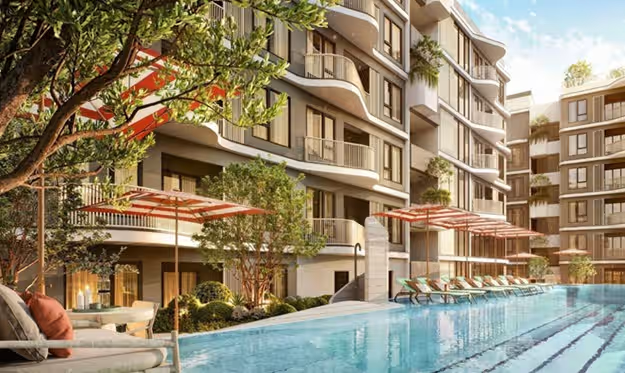
A large balcony, private garden or rooftop terrace can justify a price premium in Chiang Mai, but its value depends on actual use across the year. During pleasant months, outdoor space may be central to the property. During poor-air episodes, it can become temporarily secondary.
The value of outdoor space is easier to judge against a few practical criteria:
- how many hours a day the space is comfortable to use;
- shade, rain exposure and protection from heat;
- how often haze may make outdoor use less attractive;
- whether the building offers a useful indoor alternative;
- how much of the purchase price is tied to outdoor area.
Pools and gardens require the same realistic assessment. A smaller balcony with a strong interior layout may be a better long-term choice than a large terrace that consumes a significant share of the budget. The property should provide options rather than depend on one type of space.
Everyday services matter more when outdoor time is limited
During periods of poor air quality, convenience becomes a form of resilience. A short drive to healthcare, supermarkets, schools and indoor recreation reduces the need for long journeys or extended time outside. This is particularly relevant for families, older residents and people working from home.
A practical long-stay location should provide several indoor alternatives within a manageable radius. Useful services may include:
- hospitals or clinics;
- supermarkets and food delivery coverage;
- indoor gyms or sports centres;
- cafés and coworking spaces;
- schools and children’s activities;
- shopping centres and other air-conditioned public spaces.
The property itself should also support days spent largely indoors. Adequate storage, acoustic privacy and separation between work and rest areas become more valuable when residents are not out of the house for much of the day.
Balance environmental conditions with Chiang Mai’s wider advantages
A long-term decision should not be reduced to one environmental risk. Chiang Mai offers varied neighbourhoods, housing formats and services, while seasonal air quality is a factor that needs to be built into the decision rather than ignored.
The best comparison considers how the property performs in several difficult conditions: hot afternoons, heavy rain, traffic peaks and haze. A unit with good sealing, reliable cooling, practical indoor space and easy access to services can remain comfortable when outdoor activity is temporarily reduced. A visually appealing property that depends on open-air living may be less adaptable.
For year-round ownership, the question is therefore not whether Chiang Mai has a pollution season; official monitoring confirms that elevated PM2.5 can occur. The more useful question is whether the chosen home and neighbourhood allow daily life to continue comfortably when conditions deteriorate. That distinction turns an environmental concern into a concrete property-selection criterion.