A federal judge in Texas has been temporarily barred from hearing cases following a judicial investigation into allegations concerning her conduct, case management and ability to perform her official responsibilities. The decision involves U.S. District Judge Ada Brown, who serves in the Northern District of Texas.
On October 19, 2026, Reuters reported that the Fifth Circuit Judicial Council had made significant portions of the investigation public. The inquiry raised concerns about Brown’s handling of court cases, communications with judicial colleagues and staff, and alleged conduct during court proceedings. The council’s actions also included the reassignment of her cases and a requirement for a psychiatric evaluation.
The matter has attracted attention because federal judges hold lifetime appointments unless they leave office or are removed through the constitutional impeachment process. Although judicial misconduct procedures can impose administrative restrictions, they do not automatically remove a judge from office.
Why Was Judge Ada Brown Suspended From Hearing Cases?
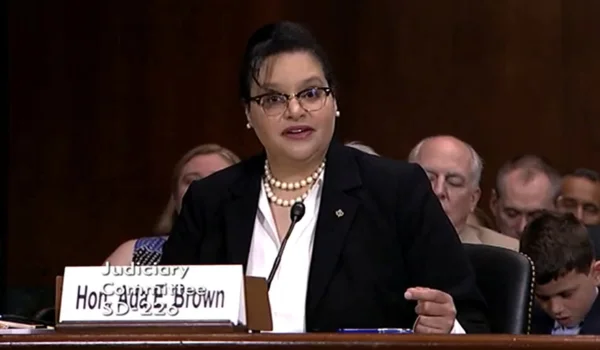
According to Reuters’ October 19 report, a special investigative committee found a reasonable basis to believe that a mental health condition might be interfering with Brown’s ability to carry out her judicial duties. This was an investigative finding, not a publicly established medical diagnosis.
The investigation reportedly identified several concerns, including alleged inappropriate comments during a hearing, communications described by the judicial council as bizarre or hostile, and racial insults directed at judges and court staff.
The inquiry also examined Brown’s repeated decisions to recuse herself from cases and a substantial backlog of unresolved matters on her docket. The committee reportedly concluded that these issues raised serious questions about the performance of her judicial responsibilities.
It is important to distinguish the committee’s findings and allegations from a final determination on every disputed issue. Brown was the subject of the inquiry, and Reuters reported that it could not reach her for comment on October 19.
What Did the Judicial Investigation Find?
The reported findings focused on three principal areas.
- Concerns About Courtroom Conduct and Communications
Investigators examined allegations that Brown made inappropriate or unusual comments during a court hearing. The Fifth Circuit’s findings, as reported by Reuters, also referred to communications involving judicial colleagues and court personnel that included alleged racial insults.
These allegations became part of the broader inquiry into whether Brown could continue performing her responsibilities effectively.
- Recusals From Numerous Cases
The investigation reportedly found that Brown had recused herself from approximately 40 cases since June 2026 for reasons described as unexplained or unusual.
Recusal is a normal legal mechanism through which a judge withdraws from a case when circumstances warrant it, including potential conflicts of interest. The number of recusals alone does not establish misconduct. In this instance, investigators examined the circumstances and reasons behind the decisions as part of a wider review.
- A Backlog of Unresolved Court Matters
The committee also raised concerns about outstanding matters on Brown’s docket and delays in issuing rulings on motions.
According to Reuters, the investigation described a significant backlog and criticised what it characterised as habitual delays. The concern was not simply that individual litigants had received unfavourable decisions, but that the overall administration of cases might have been affected.
For litigants, delays can have practical consequences, including prolonged uncertainty, increased legal expenses and postponed resolution of disputes.
Key Dates in the Ada Brown Judicial Inquiry
The following timeline summarises the major developments reported by Reuters and The Texas Lawbook.
| Date | Development |
| March 26, 2019 | President Donald Trump nominated Brown to the U.S. District Court for the Northern District of Texas. |
| September 11, 2019 | The U.S. Senate confirmed her nomination. |
| August 2026 | Fifth Circuit Chief Judge Jennifer Walker Elrod appointed a special committee to investigate the matter. |
| September 21, 2026 | The committee ordered Brown to undergo a psychiatric evaluation, according to Reuters. |
| September 29, 2026 | The Fifth Circuit Judicial Council ordered her cases to be reassigned temporarily and barred new case assignments. |
| October 5, 2026 | The Northern District of Texas issued special orders transferring Brown’s civil and criminal cases to other judges, as reported by The Texas Lawbook. |
| October 17, 2026 | Bloomberg Law reported on internal judicial investigation records and the committee’s recommendations. |
| October 19, 2026 | The Fifth Circuit Judicial Council publicly released substantial information concerning the investigation. |
| October 30, 2026 | An investigative committee scheduled an interview with Brown, according to Reuters’ October 19 report. |
The October 30 interview was a scheduled future event as of the publication date of this article; its outcome had not been established in the reporting reviewed for this article.
Who Is Ada Brown? Her Legal Career and Background
Ada Elene Brown was born in 1974 in Oklahoma City, Oklahoma. Her career includes experience in criminal prosecution, private legal practice, state appellate judging and federal judicial service.
According to the Federal Judicial Center, Brown earned her bachelor’s degree from Spelman College in 1996 and her Juris Doctor from Emory University School of Law in 1999.
She began her legal career as a family violence advocate with the Dallas County District Attorney’s Office before becoming an assistant district attorney in Dallas County. She later served as a judge on Dallas County Criminal Court No. 1 from 2005 to 2007.
After working in private practice in Dallas, Brown joined the Texas Fifth Court of Appeals in 2013. She served there until 2019, when she moved to the federal judiciary.
President Donald Trump nominated Brown to the U.S. District Court for the Northern District of Texas on March 26, 2019. The Senate confirmed her on September 11, 2019, and her judicial commission was issued on September 13, 2019.
Her federal appointment placed her on a court that handles a wide range of civil and criminal disputes within its jurisdiction.
What Happened to Her Federal Cases?
The reassignment of Brown’s docket is one of the most immediate practical consequences of the inquiry.
The Texas Lawbook reported on October 12 that Northern District of Texas Chief Judge Reed O’Connor had issued special orders transferring Brown’s civil and criminal cases to other judges. The reporting identified newly appointed U.S. District Judge Kasdan Mitchell and O’Connor among the judges receiving transferred matters.
The Fifth Circuit’s September 29 action had already directed that Brown receive no additional cases while the matter remained under review.
These steps are intended to ensure that pending litigation can continue to move through the court system rather than remain dependent on a judge who is not currently hearing cases.
However, reassignment does not automatically invalidate earlier rulings or mean that every case previously handled by Brown must be retried. The effect on a particular case depends on its procedural status and any subsequent orders issued by the court.
Lawyers and litigants with cases affected by the transfer should consult the relevant docket and official court notices for instructions about future hearings, deadlines and assigned judges.
Can a Federal Judge Be Suspended or Removed From Office?
The United States has a judicial conduct and disability process governed by the Judicial Conduct and Disability Act of 1980, codified at 28 U.S.C. §§ 351–364.
The U.S. Courts explains that a person may file a complaint alleging judicial misconduct or a disability that prevents a federal judge from performing the duties of office.
These proceedings are separate from an ordinary appeal. They are not designed to overturn a judge’s decision simply because a litigant disagrees with the outcome.
Depending on the circumstances, judicial authorities can investigate complaints, appoint special committees, take corrective or administrative measures and refer matters for further action. The precise measures available depend on the applicable law and procedural stage.
Article III federal judges generally hold office during good behaviour. Formal removal requires impeachment by the House of Representatives and conviction by the Senate. A judicial council’s decision to reassign cases or temporarily restrict a judge’s docket is not equivalent to removal through impeachment.
Consequently, Brown’s temporary restriction should not be described as a final removal from the federal judiciary.
Brown’s Response and the Unresolved Questions
The Fifth Circuit’s reported findings also state that Brown alleged discrimination and retaliation based on her race or gender involving judges, lawyers and court staff.
Those assertions form part of the broader dispute surrounding the inquiry. They should not be treated as established facts without further evidence, just as the committee’s allegations should not automatically be treated as final findings on every contested matter.
Reuters reported that Brown had at one point indicated an intention to resign, but had not formally done so by October 19. The report also said the investigation found that she had not responded to numerous questions.
Several important questions therefore remained unresolved as of October 20, 2026: the outcome of the scheduled interview, the status and results of the ordered psychiatric evaluation, whether Brown would return to judicial duties, and whether further disciplinary action would follow.
Readers should rely on subsequent judicial council orders and verified reporting for any later developments.
What This Case Means for the Federal Judiciary
The inquiry highlights a difficult issue in judicial administration: protecting the independence of judges while ensuring that they can fulfil the responsibilities entrusted to them.
Federal judges must be able to decide cases independently, without political pressure or retaliation. At the same time, the judiciary needs mechanisms to address credible concerns about misconduct, disability or prolonged failure to perform judicial duties.
The Ada Brown case also illustrates why it is important to separate three different questions: whether the allegations are substantiated, whether temporary administrative measures are necessary, and whether any eventual action warrants a more permanent change in judicial status.
The reassignment of Brown’s cases addresses the immediate operational issue. The continuing investigation concerns the underlying allegations and her ability to serve. Those are related but distinct matters.
Frequently Asked Questions
Has Judge Ada Brown been removed from office?
No. As of October 20, 2026, the reported action temporarily prevents her from hearing cases and accepting new assignments. It does not, by itself, remove her from office.
Why were her cases reassigned?
The Fifth Circuit inquiry raised concerns about her case management, conduct and ability to fulfil judicial responsibilities. Her docket was reassigned so other judges could handle the pending matters.
Was Ada Brown convicted of a crime?
The reporting reviewed for this article concerns a judicial misconduct and disability inquiry, not a criminal conviction. The reported allegations should not be described as proof that she committed a crime.
Who appointed Ada Brown as a federal judge?
President Donald Trump nominated Brown in March 2019. The U.S. Senate confirmed her in September 2019.
What happens next?
The investigation was continuing as of October 20, 2026. A committee interview had been scheduled for October 30, and further decisions depended on the ongoing proceedings and subsequent official orders.
Conclusion
The temporary suspension of Judge Ada Brown from hearing federal cases marks a significant development in a judicial inquiry involving alleged misconduct, case-management problems and concerns about her ability to perform her duties. The reassignment of her docket allows other judges to address pending matters while the investigation proceeds.
The case should be understood in its proper legal context: the reported findings are serious, but temporary administrative restrictions are not the same as criminal guilt or formal removal from office. The next major developments will depend on the continuing inquiry, Brown’s response and decisions by the relevant judicial authorities.