A disturbing discovery in West Texas has intensified efforts to stop the spread of the New World screwworm, a parasitic fly whose larvae feed on the living tissue of animals and, in rare cases, humans. State and federal officials are urging hunters, ranchers and landowners to help identify suspected infections after the parasite was confirmed in an elk harvested in Pecos County.
The detection, confirmed by authorities on October 21, marks the first reported case of New World screwworm in wildlife in the United States. It has raised concerns about the potential threat to Texas wildlife, cattle operations and the broader livestock industry.
The response now depends not only on government surveillance but also on people who regularly work outdoors. Hunters and ranchers can play an important role in spotting suspicious wounds and reporting possible infestations before they spread further.
What Is the New World Screwworm?
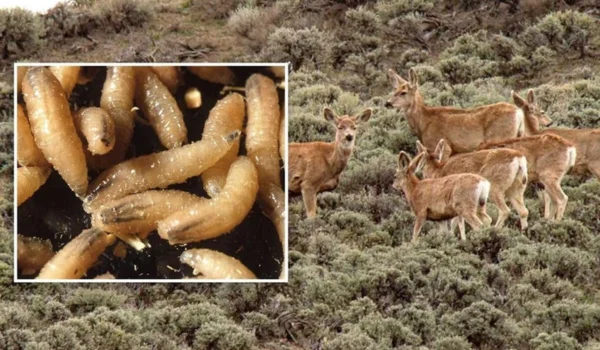
The New World screwworm (Cochliomyia hominivorax) is a parasitic fly whose larvae feed on the living tissue of warm-blooded animals. It can affect cattle, horses, deer, elk, pets and, less commonly, humans.
Unlike many maggots that feed on dead or decaying material, screwworm larvae burrow into living tissue through wounds or body openings. The resulting injuries can become severe and may be fatal if the infestation is not treated.
Female flies lay eggs around wounds, including small cuts and tick bites. After the eggs hatch, the larvae enter the wound and feed on the surrounding tissue, causing it to expand and potentially become infected.
How Hunters Can Help Detect the Parasite
Wildlife officials say hunters and landowners are particularly valuable to surveillance efforts because they regularly encounter animals in remote areas where infections might otherwise go unnoticed.
The U.S. Department of Agriculture recommends looking for the following warning signs:
- Visible maggots in wounds or body openings.
- Open, draining or enlarging wounds.
- Injuries accompanied by an unusually foul smell.
- Animals that appear weak, lethargic, isolated or distressed.
- Possible infestations around the eyes, ears, nose, mouth or genital area.
Hunters should carefully inspect harvested animals before field dressing or transporting carcasses. Any suspected infestation should be reported promptly to the appropriate wildlife or animal-health authorities.
Ranchers should also monitor livestock, especially newborn animals and those with recent injuries or wounds. Early identification and treatment can help prevent severe damage and reduce the risk of further spread.
New Mexico Reports Another Case in Cattle
The concern extends beyond Texas. Authorities in New Mexico also reported a New World screwworm infection in a beef cow during the same week as the Texas wildlife detection.
According to Fox News, officials established an infested zone around the affected New Mexico animal. Livestock within the zone are subject to inspection and, where necessary, treatment before being moved.
The two developments underscore the importance of coordinated surveillance across state lines. Livestock transportation and wildlife movement can complicate containment efforts, making communication between animal-health agencies and agricultural producers particularly important.
Why the Outbreak Matters to Texas Ranchers and the Beef Industry
Texas has a substantial cattle industry, and a widespread screwworm outbreak could impose additional costs on ranchers through veterinary treatment, animal losses, inspections and movement restrictions.
Wildlife populations could also be affected. The USDA warns that untreated infestations can kill animals, reduce herd sizes and compromise meat quality. More intensive surveillance could lead to additional inspections or temporary restrictions affecting hunting and the transportation of harvested game.
However, there is an important distinction between an animal-health threat and a food-safety emergency. The USDA says New World screwworm is not considered a food-safety issue and that the U.S. food supply remains safe. The principal concerns are the parasite’s impact on animal health, agricultural production and wildlife.
A Look Back: How the United States Previously Eliminated Screwworm
The United States has dealt with New World screwworm before. According to the USDA, the parasite was eradicated from the country in 1966 through a control strategy that included releasing sterile male flies.
The sterile-insect technique works by releasing large numbers of sterilised male flies. When they mate with wild females, the resulting eggs do not produce offspring, gradually reducing the pest population.
A smaller outbreak in the Florida Keys was also eliminated in 2017.
More recently, the parasite has spread northward through Central America and Mexico. The USDA has described the renewed threat as a major concern for American livestock and wildlife, prompting expanded surveillance and efforts to strengthen control measures.
The latest Texas detection is significant because it confirms the parasite’s presence in U.S. wildlife during the current outbreak, rather than solely in domestic animals.
What Are Authorities Doing to Contain the Spread?
The federal response involves the USDA’s Animal and Plant Health Inspection Service, Texas Parks and Wildlife Department, the Texas Animal Health Commission and other state and federal partners.
Following the elk detection, authorities announced additional wildlife surveillance in the surrounding area. The Texas Animal Health Commission also planned to modify an existing infested zone.
The broader response includes monitoring animal movements, inspecting livestock, treating suspected infestations and supporting research into improved control methods.
The USDA has also announced a funding opportunity of up to $100 million for research and innovation projects designed to improve sterile-fly production, preparedness and response strategies.
These efforts are intended to identify infections early, limit the parasite’s movement and prevent a larger outbreak from taking hold.
What Hunters, Pet Owners and Ranchers Should Do
People who work with animals or spend time outdoors should remain alert without assuming that every wound or maggot infestation is caused by screwworm.
Anyone who finds suspicious larvae, unusual wounds or a foul-smelling injury should avoid unnecessary handling and promptly contact the relevant animal-health or wildlife authority. Hunters should follow official instructions before moving a carcass from a potentially affected area.
For Texas livestock, suspected cases can be reported to the Texas Animal Health Commission. Suspected cases in wildlife should be reported to Texas Parks and Wildlife. The USDA’s official screwworm information portal also provides identification guidance and reporting resources.
Conclusion
The discovery of New World screwworm in a hunter-harvested elk in Pecos County marks an important development in the United States’ response to the parasite. The simultaneous report of an infected beef cow in New Mexico adds to concerns about protecting livestock and wildlife across the Southwest.
Authorities are asking hunters, ranchers and landowners to help detect suspected infections early, while expanding surveillance and adjusting control measures.
Although the parasite can cause serious and potentially fatal injuries in animals, officials say the U.S. food supply remains safe. The immediate priority is to limit its spread, protect animal populations and prevent the outbreak from creating wider agricultural and economic damage.