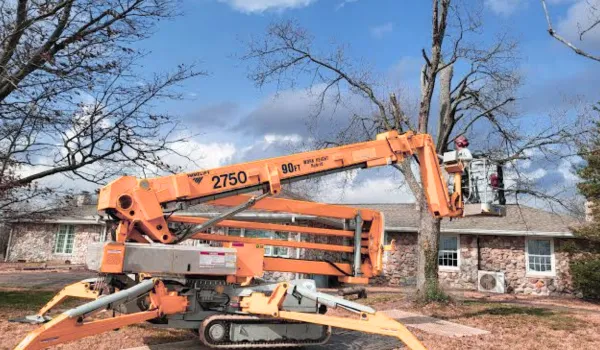
Tree care work already ranks among the most dangerous jobs in the country. Add a boom lift to the mix and you’ve got a piece of heavy equipment operating at height, near power lines, on uneven ground, and around falling limbs. The combination multiplies the risk.
Boom lifts (also called aerial work platforms or cherry pickers) give tree crews access that climbing alone can’t always provide. But using one safely on a tree job isn’t the same as using one on a flat construction site. The terrain is rougher, the hazards are less predictable, and a single mistake can turn fatal.
If your crew uses boom lifts on tree removals, trimming jobs, or storm response work, having the right tree service insurance in place is step one. But insurance doesn’t prevent the incident. The practices below do.
Why Boom Lift Safety Is Different on Tree Jobs
On a standard construction site, boom lifts operate on compacted, level ground with clear overhead space. Tree work is a different story.
You’re often setting up on soft soil, slopes, or residential lawns that can’t support outrigger loads. There are overhead power lines threading through the canopy. And the material you’re working with (heavy, unpredictable limbs) can shift the load dynamics in the basket mid-cut.
Tree crews also deal with weather exposure that most other boom lift operators don’t. Storm damage calls mean working in conditions that are still deteriorating. Wind, wet ground, and weakened tree structures all hit at once.
Quick summary: Tree care boom lift operations face unstable ground, overhead power lines, unpredictable loads from falling limbs, and weather conditions that standard construction sites rarely deal with.
Pre-Job Site Assessment: Don’t Skip It
Every boom lift job on a tree site needs a walkaround before anyone touches the controls. This isn’t a formality. It’s where you catch the things that cause incidents.
Walk the site as a team and look for:
- Overhead power lines
Assume every line is energized. Keep the boom at least 10 feet from any conductor, and increase that distance for higher-voltage lines.
- Ground conditions
Soft soil, slopes, and wet turf can cause the lift to sink or tip. Check that the ground under the outriggers is firm and level. Use cribbing or pads if needed.
- Tree structure
Look for dead limbs, cracks, splits, and lean. A weakened tree can drop material without warning.
- Drop zones
Mark a clear zone that extends at least twice the height of the limb being removed. Keep everyone out during cuts.
Assign a ground spotter to watch clearances, communicate with the operator, and control access around the lift’s swing radius.
Boom Lift Safety Before You Leave the Ground
Once the site is assessed, run through the equipment itself. A two-minute walkaround catches problems that would be catastrophic at 60 feet.
Check tires, hydraulic lines, fluid levels, and the platform floor. Test the joystick, emergency stop, and limit switches. Inspect guardrails for damage and confirm the harness anchor point is secure.
Every operator needs a full-body harness tethered to the lift’s designated anchor point. Hard hats, eye protection, and non-slip boots are non-negotiable.
And here’s the one that catches people: know the weight limit. The basket’s rated capacity includes the operator, tools, and any cut material that lands in the platform. A chainsaw, fuel, and rigging gear add up fast. Exceeding that limit at full extension puts the whole machine at risk of tipping.
Note: Never use the boom lift to support rigging loads or lower heavy limbs through the basket. The platform is rated for personnel and hand tools, not for material handling.
Operating the Boom Lift During Tree Work
Smooth, controlled movements are the rule. Sudden jerks or fast direction changes at height can swing the basket and throw the operator off balance, even with a harness on.
Keep the boom centered over the base during repositioning. If you need to move the lift, retract the boom and lower the platform first. Driving with the boom extended is one of the fastest ways to tip a boom lift on uneven tree site terrain.
When cutting, position the basket so the operator has a clear line to the work without leaning over the rails. If something isn’t reachable, reposition the lift. Climbing on the guardrails to gain a few extra inches of reach is how people fall.
Use clear communication between the operator and ground crew. Voice commands, hand signals, or radios all work.
Weather, Wind, and Knowing When to Stop
Every boom lift has a maximum wind speed rating. Tree crews need to take that seriously, especially during storm cleanup when the pressure to get the job done is high.
If gusts approach the machine’s rated limit, lower the platform and stop work. A boom at full extension acts like a sail. Wind loads that feel manageable on the ground can destabilize the lift at height.
Lightning is a hard stop. If there’s any chance of electrical storms, the crew comes down and stays down until conditions clear.
Rain and wet conditions affect ground stability under the outriggers. Saturated soil can shift under load, causing the lift to settle unevenly or tip. Check ground conditions throughout the day, not just at setup.
Important: Storm response work is where the most boom lift incidents happen in tree care. Pressure to restore access and clear debris leads to rushed setups and skipped safety steps. Slow down. The extra ten minutes are always worth it.
What Happens When Boom Lift Safety Fails
When an incident does happen, the consequences are severe. Falls from height, electrocution from power line contact, and crush injuries from tip-overs are the leading causes of fatalities in tree care.
From an insurance standpoint, a single boom lift incident can generate workers’ comp claims, third-party liability suits, and equipment damage costs that run into six figures. Providers like NIP Group build coverage specifically for tree care operations, but no policy works as well as preventing the incident in the first place.
FAQs
1. Do tree care crews need special training to operate boom lifts?
Yes. OSHA requires that aerial lift operators receive training specific to the equipment they’ll use, including hands-on operation, hazard recognition, and emergency procedures. General chainsaw or climbing certifications don’t cover boom lift operation.
2. How close can a boom lift get to power lines during tree work?
OSHA requires a minimum 10-foot clearance from power lines for unqualified workers. Higher-voltage lines require greater distances. Only qualified line-clearance tree trimmers should work within minimum approach distances.
3. What’s the biggest boom lift safety mistake tree crews make?
Operating on unstable ground without proper cribbing or outrigger support. Soft soil, slopes, and wet turf are common on residential tree jobs, and a boom lift that sinks or shifts at height can tip without warning.
4. Does tree service insurance cover boom lift accidents?
Most tree service insurance policies cover aerial lift incidents under general liability and workers’ comp, but coverage details vary. Confirm that your policy specifically includes aerial work platform operations and doesn’t exclude rented or leased equipment.