Tesla could receive local tax incentives extending for as long as 35 years if it builds a proposed $10.1 billion solar manufacturing facility in Fort Bend County, Texas. The county approved four agreements on October 22 designed to attract the project, which could create nearly 10,000 permanent jobs.
The decision represents a major step in Texas’s efforts to attract large-scale advanced manufacturing investment. However, the project is not yet guaranteed to happen in Texas. Tesla is still evaluating the Fort Bend County location against an alternative site outside the state.
The proposed facility, known as Project Crystal Sun, would manufacture solar cells and assembled solar modules. Its planned operations could cover several stages of solar manufacturing, from silicon ingots and wafers to finished products.
The most significant part of the deal is its duration. Under the approved county agreements, Tesla could receive a full exemption from certain county property taxes on eligible equipment for the first 10 years, followed by substantial tax rebates over the next 20 years. If the company meets an additional employment requirement, the rebate period could extend by another five years.
The agreements were approved by a 4–0 vote of the Fort Bend County commissioners, while Interim County Judge Daniel Wong abstained because of his business relationship with Tesla.
Sources:Fort Bend County’s official meeting agenda.
What Is Tesla Planning to Build in Texas?
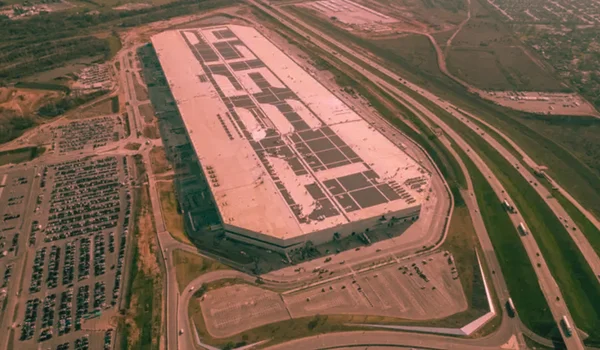
Tesla’s proposed solar manufacturing facility would be located on a site covering approximately 3,050 acres near the intersection of FM 762 and FM 1994, south of Richmond and Rosenberg in Fort Bend County, southwest of Houston.
According to the company’s application submitted under Texas’s Jobs, Energy, Technology and Innovation (JETI) program, the project represents an estimated capital investment of approximately $10.116 billion.
The investment is divided into two major categories:
| Project detail | Estimated figure |
| Total capital investment | $10.116 billion |
| Real property | Approximately $1.52 billion |
| Equipment and other personal property | Approximately $8.6 billion |
| Expected permanent employment | 9,712 jobs |
| Estimated annual payroll at full operation | $1.3 billion |
| Expected commercial production | First quarter of 2029 |
These figures come from Tesla’s application and supporting economic analysis. They represent proposed investment and projected economic activity, not completed construction or jobs already created.
The planned facility would include manufacturing buildings, production lines, utility infrastructure, warehouses and related site improvements. Tesla is proposing an integrated manufacturing operation capable of producing solar cells and assembling solar modules.
If completed as described, the project could become a significant addition to the United States’ domestic solar manufacturing capacity.
Source: Lamar Consolidated ISD’s Tesla JETI project information.
Why Could Tesla Receive 35 Years of Tax Incentives?
The 35-year period comes from several separate agreements rather than one blanket tax exemption. Fort Bend County approved four measures covering property tax abatements, economic development incentives and payments associated with a potential foreign-trade zone designation.
Years 1–10: Full county property tax abatement on eligible equipment
Under the county’s Chapter 312 tax abatement agreement, Tesla would receive a 100% abatement of county property taxes on eligible equipment and other tangible personal property at the facility for 10 tax years.
The agreement is scheduled to begin in tax year 2029 by default. Tesla can move the start to the first tax year after production begins, potentially as late as 2031, without requiring additional county approval.
Importantly, this provision does not exempt the entire property from taxation. Land and buildings remain taxable, as do other items that do not qualify for the abatement.
Years 11–30: Annual rebates covering 90% of eligible equipment taxes
After the initial abatement period, the county’s Chapter 381 economic development agreement would provide a different type of incentive.
Tesla would pay the applicable county taxes on its equipment and then receive an annual grant equal to 90% of those taxes for 20 years. The county would retain the remaining 10% for its general fund.
This arrangement means the company would initially pay the taxes and receive a rebate rather than simply having the entire amount waived at the outset.
Years 31–35: An additional incentive tied to employment
The agreement includes a provision that could extend the rebate period by five years.
To qualify, Tesla must average at least 12,000 employees for any two consecutive years during the first 10 years. If it meets that threshold, the first five years of the rebate period would provide a 100% grant, and the total rebate period would increase from 20 years to 25 years.
This condition is significant because Tesla’s current application projects 9,712 permanent full-time positions. The additional 12,000-worker threshold is therefore 2,288 positions above the company’s stated employment projection.
The potential 35-year incentive period is conditional. It should not be interpreted as an unconditional promise that Tesla will receive every benefit for the full duration.
How Would Inventory Taxes Be Handled?
Inventory is addressed separately through an agreement involving a potential foreign-trade zone designation associated with Port Freeport’s Foreign-Trade Zone No. 149.
Foreign-trade zone arrangements can provide specific tax advantages for eligible inventory, subject to the applicable legal and contractual requirements.
Under the proposed arrangement, Tesla would make payments in lieu of certain taxes, commonly called PILOT payments. The agreement initially sets those payments at zero dollars, or 0% of the otherwise forgone taxes, while the relevant abatement is in effect.
After the initial period, the inventory-related payment would increase to 10% of the taxes that would otherwise apply, according to the published agreement details.
This is another reason the deal should not be described simply as a 35-year tax-free factory. Different assets, taxes and incentive periods are governed by different provisions.
What Must Tesla Deliver to Keep the Incentives?
The agreements include investment, construction, production and employment requirements.
According to the published terms, Tesla must:
- Begin construction by June 30, 2027.
- Begin regular commercial production of solar cells by December 31, 2030.
- Invest $10 billion by the later of December 31, 2031, or two years after commercial production begins.
- Increase its permanent workforce in stages, reaching 9,712 employees by the fourth year of operations.
- Maintain average compensation of $55 per hour under the employment requirements.
The agreement also contains provisions for certain delays, including force majeure events and specified electricity-grid-related delays.
The county can inspect and audit compliance. However, the consequences of failing to meet the requirements vary.
Missing an employment or wage target for one year can result in the loss of that year’s incentive. Two consecutive years of missed targets can allow the county to terminate the agreement. More serious contractual defaults, such as failing to make the required investment or abandoning the facility for 12 months, can trigger repayment obligations covering previously abated taxes, with a possible additional penalty if repayment is not made within the specified period.
These provisions are important because they establish conditions under which the incentives may be reduced, suspended or terminated.
How Much Tax Revenue Could Fort Bend County Give Up?
The potential public cost is a central question in the Tesla proposal.
According to the economic analysis prepared by consulting firm Kroll for Tesla’s JETI application, the project could generate approximately $276.5 million in Fort Bend County general property taxes over 38 years without the incentives. The estimate includes land, buildings and equipment and is not limited to the property taxes covered by the county’s agreements.
Electrek reported that the estimate peaks at approximately $16.2 million in 2030.
These figures are projections rather than guaranteed collections. Actual tax revenue would depend on the final facility, property values, applicable tax rates, production schedules and whether Tesla meets the conditions of the agreements.
The county’s separate true-up agreement guarantees a minimum annual payment of $2 million under its specified calculation. Certain property taxes and other payments count toward that amount.
The minimum payment should not be confused with the total economic benefit of the project or a guarantee that the county will collect the full amount projected in the company’s economic analysis.
A complete assessment of the deal would need to compare the tax incentives with actual future revenue, public service costs, infrastructure needs and the economic activity generated by the facility.
Why Is Texas Competing So Aggressively for Tesla?
Tesla’s application says the Fort Bend County location is not economically competitive with an alternative site in another state without the proposed JETI tax limitation and local incentives.
The competing location has not been publicly identified in the available application details.
This is a common feature of large industrial site-selection negotiations. Companies compare tax rates, incentives, labor availability, infrastructure, electricity supply, transportation and other operating costs before deciding where to invest.
For Texas, the potential benefits include manufacturing employment, payroll spending, demand for suppliers and contractors, and a broader industrial base.
Supporters also argue that a major solar manufacturing plant could attract additional businesses to the region and strengthen the domestic clean-energy supply chain.
However, these benefits remain prospective until Tesla selects the site, builds the facility and begins operations.
A Brief History of Project Crystal Sun
The proposal has moved through several stages during 2026.
August 2026: Tesla’s application for the proposed $10.1 billion facility became public. It outlined the company’s investment plan, employment projections and request for a property tax limitation under the JETI program.
September 2026: Lamar Consolidated Independent School District trustees approved moving forward with the proposed school property tax incentive. The district’s action advanced the application but did not guarantee that Tesla would select Fort Bend County.
October 22, 2026: Fort Bend County commissioners approved four agreements covering county property tax abatements, economic development grants, a foreign-trade zone arrangement and a true-up payment agreement.
October 23, 2026: Electrek reported the county’s decision and explained how the incentive package could extend to 35 years.
The project still faces a crucial uncertainty: Tesla has not made a final site-selection decision. The county’s approval improves the Fort Bend proposal’s financial attractiveness, but it does not mean the factory is certain to be built there.
What Happens Next?
The next major milestone is Tesla’s final site-selection decision. If the company chooses Fort Bend County, it must meet the construction, investment, production and employment requirements outlined in the agreements.
The proposed timeline anticipates construction activity beginning in 2026–2028, with commercial operations targeted for the first quarter of 2029. The contractual deadlines, however, allow for production to begin later under specified circumstances.
The proposed project could be economically significant for Fort Bend County, but its final impact will depend on whether Tesla proceeds and how closely actual investment, employment and tax collections match the projections.
Conclusion
Fort Bend County’s approval of Tesla’s incentive package is a major development in the competition to attract a proposed $10.1 billion solar manufacturing facility to Texas. The agreements could provide substantial local tax relief over several decades while requiring Tesla to meet specific investment, construction and employment commitments.
The distinction between approval and completion remains essential. The county has approved the incentives, but Tesla has not committed to building Project Crystal Sun in Fort Bend County. The potential 35-year incentive period also depends on contractual conditions and applies to specific tax arrangements rather than providing a blanket exemption from all property taxes.
If Tesla ultimately selects the Texas site and meets its commitments, the project could create thousands of manufacturing jobs and expand domestic solar production. Until then, the investment and employment figures remain projections, and the final economic outcome is still uncertain.