This is a question that eventually each investor is forced to ask himself. Is the portfolio weighted towards established big brands or start-up that are still trying to make inroads into the market? The answer determines the returns, risk, and the performance of a portfolio during changes in conditions.
Why Large Caps Set the Tone
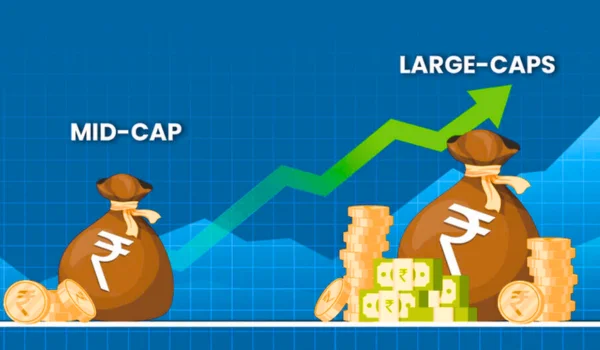
Large cap stocks make headlines, as their activities affect the overall market. They are deeply liquid, have proven consistent cash flow and sufficient size to weather the storms that could ravage a smaller company. Market sentiment can follow large cap rallies as they can help drive most benchmark indices.
Early signals about how large caps might behave often show up before the domestic session even opens. Watching gift nifty live gives traders a sense of overnight global cues, since this contract trades for nearly 21 hours a day and reacts quickly to international developments. A sharp move in this index frequently hints at how large cap heavy benchmarks will open once trading begins locally.
Large caps also benefit from consistent institutional interest. Foreign portfolio investors and domestic funds alike tend to concentrate positions here first, which adds a layer of stability that smaller companies rarely enjoy during periods of stress.
Where Midcaps Change the Equation
Midcap companies operate on a different growth curve entirely. They are not quite big enough or stable enough to be considered the leaders of the market, but they aren’t small caps either. This midrange position tends to produce more impressive gains during expansion periods, however it also has a higher number of volatility throughout the way.
The nifty midcap 100 index directly reflects this, and it is designed to track the performance of 100 companies across eighteen different sectors, such as financial services, capital goods and healthcare. The index started at 1000 in 2005, and has been growing at an incredible rate over the last 20 years, to the present day when it stands at well over 27,000.
Midcap stocks are more sensitive as compared to large cap stocks to a broader range of factors. Many factors influence the movement of this segment, including interest rates, fluctuations in fuel prices, industrial production data and even the stability of the government. It’s a two-way street, too, as strong economic times bring greater upside, but falling times bring more downside.
Comparing Leadership Patterns
These two segments tend to turn the screws as market leaders, depending on the stages of the economic cycle. During periods of uncertainty and/or slowing growth, large caps are likely to be front runners. The midcap stocks typically lead the recovery type when investors become risk appetite and growth potential increases relative to the earnings growth of large caps.
This is no random rotation. It is a measure of investor flows rising or falling based on rate expectations and future earnings prospects and the overall sentiment of investors. In fact, it is useful to watch at what point is the segment performing better as it will give you a good indication of the stage of the market cycle.
Building a Balanced View
Of the two segments, either alone is not useful in most portfolios. Large caps give stability to the portfolio during challenging times, and midcaps give growth potential in the portfolio to boost long term returns. The appropriate mix is dependent upon the risk tolerance, the time horizon and the amount of volatility that an investor is able to withstand without getting emotional.
The first step in knowing what market leadership is all about is to become aware of the fact that both segments have different functions at various stages of the cycle. Those who follow both – not just one – feel much more confident in their ability to deal with the changes that may happen this quarter, as opposed to those investors who are solely interested in getting in on the bottom of the market of a particular quarter’s market leader.